Showing posts with label Baby Food Recipes. Show all posts

Sunday, 14 June 2015

Baby Food Recipes

Baby Food Recipes
Biography Source Google.com
Baby's First Foods
First bites are a big milestone in baby’s life. Here's a step-by-step guide to introducing solid foods.
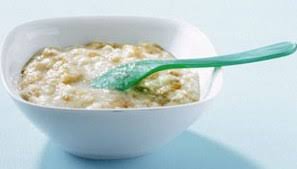
1. Pick a single-grain infant cereal, such as rice, or a single-fruit or vegetable puree (see recipes in this slideshow), and prepare it. Cereals should be prepared with breast milk or formula.
2. Serve the same food to baby for at least four days, watching for any signs of allergy or intolerance.
3. Move on to a new food, and start the process over until baby has tried a variety of single foods.
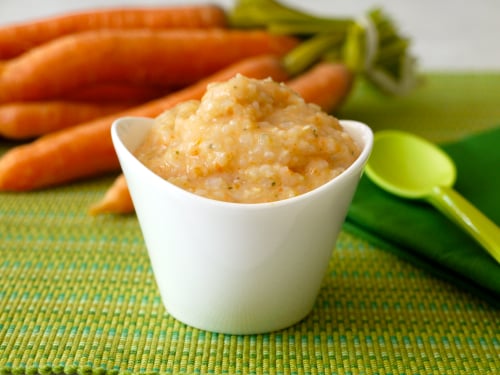
Looking for the perfect first purees? We recommend Carrots, Bananas, Avocado, Green Peas, or Butternut Squash. These purees tend to be popular with baby because they are smooth, mild-flavored, and slightly sweet. Remember to thin them down to an almost liquid consistency for baby’s first few meals.
Yield: 6 servings (serving size: 1 cup pasta mixture and 2 teaspoons cheese)
Cooking Light
More from Cooking Light
Healthy Meal Planning Made Easy: Try the Cooking Light Diet
50 Ways with Chicken Breasts
How to Make Quinoa
100+ Slow-Cooker Favorites
22 Healthy Lunch Ideas
Top-Rated Soup Recipes
Nutritional Information
Calories 351
Caloriesfromfat 28 %
Fat 11 g
Satfat 4.7 g
Monofat 3.8 g
Polyfat 1.3 g
Protein 13.8 g
Carbohydrate 50.8 g
Fiber 3.8 g
Cholesterol 20 mg
Iron 2.5 mg
Sodium 554 mg
Calcium 209 mg
Ingredients
2 tablespoons butter $
2 tablespoons pine nuts, toasted
1 tablespoon chopped fresh sage
1 teaspoon olive oil $
1 garlic clove, minced
2 1/2 cups water, divided
1 pound butternut squash, peeled, seeded, and shredded
1 teaspoon sugar $
3/4 teaspoon salt
1/2 teaspoon black pepper
12 ounces uncooked penne (tube-shaped pasta)
1 cup (4 ounces) finely shredded Parmesan cheese, divided
Preparation
Melt 2 tablespoons butter in a large nonstick skillet over medium-high heat until lightly browned. Add pine nuts and sage; remove from heat. Remove from pan, and set aside.
Heat olive oil in pan over medium-high heat. Add garlic to pan, and sauté 30 seconds. Reduce heat to medium. Add 1 cup water and squash to pan. Cook for 12 minutes or until water is absorbed, stirring occasionally. Add remaining water, 1/2 cup at a time, stirring occasionally until each portion of water is absorbed before adding the next (about 15 minutes). Stir in sugar, salt, and pepper.

Cook pasta according to package directions, omitting salt and fat. Drain, reserving 1/2 cup pasta water. Combine pasta and squash mixture in a large bowl. Add reserved 1/2 cup pasta water, butter mixture, and 3/4 cup cheese; toss well. Sprinkle with remaining 1/4 cup cheese. Serve immediately.
Baby Food Recipes
Baby Food Recipes
Baby Food Recipes
Baby Food Recipes
Baby Food Recipes
Baby Food Recipes
Baby Food Recipes
Baby Food Recipes
Baby Food Recipes
Baby Food Recipes
Baby Food Recipes
Baby Food Recipes
Baby Food Recipes
Baby Food Recipes
Baby Food Recipes
Baby Food Recipes
Baby Food Recipes

Baby Food Recipes

Baby Food Recipes
Biography Source : Google.com.pk
Feeding Baby Butternut & Acorn Squash – Healthy Butternut & Acorn Squash Baby Food Recipes
image:
squash-baby-food
Image: Shutterstock
Butternut, Acorn & Winter Squash for Baby Food – Introducing Squash to Baby: (4)6-8 months old
While the recommended age for starting solid foods is generally 6 months of age, many babies start solids between 4 and 6 months of age. These recipes are appropriate for this age range.
Winter Squash, like butternut squash and acorn squash, is a wonderful first food for your baby. High in Vitamins and Calcium – smooth, delicious and very nutritious, these winter squashes are sure to be a hit with your little one.
Just check out the amount of Vitamin A and Folate 1 cup of baked squash cubes contain: Folate – 57.40 mcg and Vitamin A – 7,291.85 mg.
When can I introduce Butternut Squash or Acorn Squash to my Baby?
Squash may be offered as early as 4 – 6 months old. Butternut and acorn squash are wonderful additions to baby’s first foods. These winter veggies roast up to tasty flavorful perfection and blend and puree into as thin of a texture as you require.
The Goodness of Butternut Squash, Acorn Squash and other Winter Squash for Baby Food
Winter Squash
As the nutritional content of Winter squash varies with the variety of squash, you will find a nutritional summary accounting for all varieties below:
Nutrition Facts (1 cup cooked-baked, butternut cubes)
Univ. of IL – Watch Your Garden
Calories – 79.95
Protein – 1.82 grams
Carbohydrate – 17.94 grams
Dietary Fiber – 5.74 grams
Calcium – 28.7 mg
Iron – 0.67 mg
Potassium – 895.85 mg
Folate – 57.40 mcg
Vitamin A – 1144 IU
How to select and store Butternut Squash, Acorn Squash and other Winter Squash for baby food
purchaseorganic According to the EWG, winter squash such as butternut and acorn are not one of the “dirty dozen” foods that are most highly contaminated with pesticides. Hard rind or shelled fruits and veggies usually keep out any contaminants – purchasing organic is a personal choice.
A squash is characterized as a “Winter” squash not only due to the season in which it grows, but also due to the way the squash itself grows. Winter squash actually mature on the vine and do not further mature or ripen once harvested. The rind or shell of a Winter squash is very hard and thick. Peak season for Winter squash is November through December
Some varieties of Winter squash are as follows however the Acorn and the Butternut are the best choices for Baby’s First Squash experience. These types of squash are best given to an infant between 6-8 months old. (If you start solids early at 4 months, Winter squash is also appropriate)
Butternut Squash: a light tan color, elongated pear or bell-shaped. A deep orange flesh, loaded with a sweet, nutty flavor.
Acorn Squash:  This squash is probably one of the most easily recognized and most often eaten. It does have an acorn shape to it along with deep furrows. The acorn squash is typically a deep dark green however there are some varsities that are yellow or orange. If you find and acorn squash that has orange or yellow splotches on it, this is indicative of it’s quality. Regardless of the color of the acorn squash, the meat is sweet and Yummy baked with brown sugar and a dash of cinnamon.
Hubbard Squash: You can’t miss a Hubbard. This squash is typically very very large and looks like a misshapen teardrop. Bumpy and thick skinned, it has a blue-gray or sometimes a sea green color. The flesh is rich and slightly sweeter than the banana.
Delicata Squash : You may know this squash as sweet potato or bohemian squash. It is a bit like the acorn squash in shape though more cylindrical like a butternut. The shell of a Delicata is rather pretty, it is yellow with green stripes and reddish-brown spotting or spattering. The meat is a pale yellowish-orange and the taste is mild and a bit like corn.
The best way to store butternut squash, acorn squash or other winter squash for baby food
Winter squash typically may be stored for a long period of time. Depending on the variety, a winter squash such as the Butternut, may be stored for up to four months. Store your winter squash in a cool dry place for optimal storage times.
The best way to cook butternut squash, acorn squash and other winter squash for baby food
The best way to cook butternut squash, acorn squash and other winter squash for baby food recipes is to bake or roast the squash. You retain the most nutrients while bringing out the most flavor. Roasting or baking winter squash is also easier because you won’t spend forever and a day tying to peel and cube the squash for steaming or boiling.
How to bake or roast a butternut squash for baby food
Step 1: With a sharp kitchen knife, cut the butternut squash in half – lengthwise.
Step 2: Scoop out the seeds from the round end of the cut butternut squash
Step 3: Lay butternut squash “face” or meat-side down in a baking dish with about 1-2 inched of water.

Step 4: Bake at 400 degrees F for 40 minutes or until shell/skin looks puckery and turns a darker tan.
Baby Food Recipes

Baby Food Recipes

Baby Food Recipes

Baby Food Recipes

Baby Food Recipes

Baby Food Recipes

Baby Food Recipes

Baby Food Recipes

Baby Food Recipes

Baby Food Recipes

Baby Food Recipes
Baby Food Recipes

Baby Food Recipes
Baby Food Recipes

Baby Food Recipes
Baby Food Recipes

Baby Food Recipes